Many homeowners wonder about the best methods for keeping their floor coverings fresh and clean. While professional services like a carpet cleaning company in Los Angeles might be ideal for delicate pieces, understanding how to use carpet cleaners on your rugs properly can save time and money. This guide explores the compatibility of different rug materials with carpet cleaners, preparation steps, proper cleaning techniques, stain treatment, and maintenance practices to help you achieve professional-quality results at home.
Understanding Rug Material Compatibility
Before using a carpet cleaner on your rug, understanding the compatibility of the rug material with the cleaning method is crucial. Different rug materials require specific cleaning techniques to avoid damage. Wool rugs are sensitive to high pH cleaners, while synthetic fibers are more durable and can withstand a wider range of cleaning solutions. Cotton rugs may shrink if exposed to excessive moisture, so using a carpet cleaner that allows quick drying is essential. Silk rugs need gentle cleaning methods to preserve their delicate fibers. By identifying your rug’s material and researching appropriate cleaning techniques, you can ensure effective cleaning while maintaining the rug’s quality and longevity.
Preparing the Rug for Cleaning
To ensure effective cleaning results, the first step in preparing your rug for cleaning is to thoroughly inspect the material type and any existing stains or spots that require attention. Identify the fabric of your rug, whether it’s wool, synthetic, cotton, or another material, to determine the most suitable cleaning method. Take note of any specific care instructions provided by the manufacturer. Check for stains or spots that need pre-treatment before using a carpet cleaner. Addressing these areas beforehand can prevent them from setting further during cleaning. Remove any furniture or obstacles from the rug to ensure an unobstructed cleaning surface. This careful preparation sets the stage for a successful and thorough cleaning process.
Using the Carpet Cleaner Correctly
Properly understanding the carpet cleaner’s features and settings is necessary to effectively clean your rug without causing damage or leaving residues behind. Before starting, familiarize yourself with the cleaner’s controls, such as power settings, water temperature adjustments, and cleaning solution dispensing mechanisms. Ensure the rug is secured correctly and the cleaner is filled with the recommended amount of water and cleaning solution. Begin by slowly pushing the cleaner forward, allowing the rotating brushes to agitate and lift dirt. Pull the cleaner back over the same path to suction up moisture and grime. Repeat this process until the entire rug is clean. Empty the dirty water tank frequently to maintain optimal cleaning performance.
Handling Stains and Spills
Understanding the appropriate cleaning solutions and techniques is essential for effectively addressing stains and spills on your rug. When dealing with spills or stains, it’s critical to act promptly to prevent them from setting in. Here are some expert tips for handling stains and spills effectively:
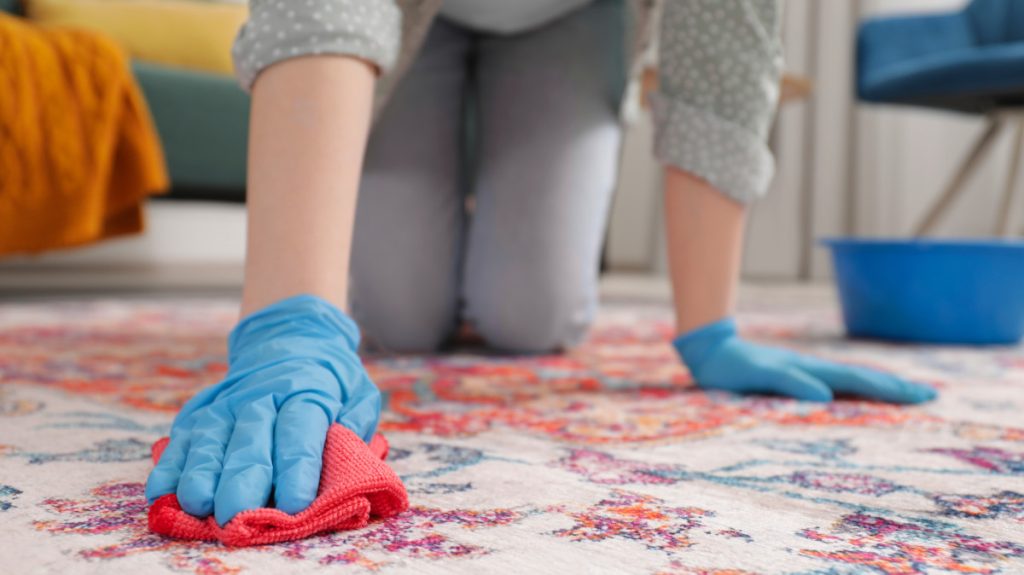
– Blot the stain immediately with a clean cloth to absorb as much liquid as possible.
– Avoid rubbing the stain, which can spread it further into the rug fibers.
– Test any cleaning solution on a small, inconspicuous area of the rug first to make sure it doesn’t cause damage.
– To treat the stain, use a gentle cleaning solution, such as a mixture of water and mild detergent.
– Work from the outside of the stain towards the center to prevent spreading.
Drying and Maintaining the Clean Rug
After successfully cleaning your rug, the next vital step is ensuring it dries properly to maintain its cleanliness and prevent potential damage. To dry your rug effectively, place it in a well-ventilated area away from direct sunlight to prevent color fading. Avoid hanging it over a railing or line, as this can distort the shape. Using fans or opening windows can help speed up the drying process. It’s essential to make sure the rug is completely dry before placing it back on the floor to prevent mold and mildew growth. Regular vacuuming helps maintain its cleanliness and prolongs its lifespan. Following these drying and maintenance tips, you can keep your rug looking fresh and vibrant for years.
Related Topics:
– When to Replace Carpet: Expert Tips for Homeowners
– How to Reseal Grout: A Simple Method for Reviving Your Floors