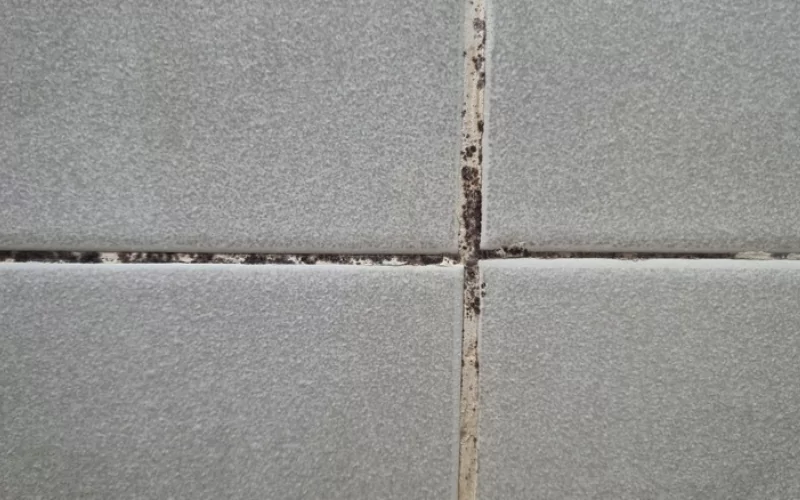
Removing mold stains from grout can be tougher than it looks. But with the right method, you can clean grout effectively, even with the common household solutions.
In this blog, we’ll cover four simple ways to remove mold stains from grout using hydrogen peroxide, baking soda, and vinegar in a few simple steps. Let’s get started!
4 Methods to Remove Mold Stains from Grout
Note: Before you use any of the mentioned solutions, remember to test the solution in a small part of the floor to check for any adverse effects.
1. Hydrogen Peroxide
Step 1: Mix 3% hydrogen peroxide and water in equal parts.
Step 2: Apply the solution directly to the grout using a spray bottle or a brush.
Step 3: Let the solution sit for 10-15 minutes to break down the mold.
Step 4: Scrub the grout with a toothbrush or a grout brush.
Step 5: Rinse the area with warm water.
2. Baking Soda
Step 1: Make a thick paste by mixing baking soda with water.
Step 2: Spread the paste over the moldy grout lines.
Step 3: Let it sit for 10 minutes.
Step 4: Scrub the grout with a brush to remove stains.
Step 5: Wipe away the paste with a damp cloth.
3. Vinegar
Step 1: Pour white vinegar into a spray bottle.
Step 2: Spray the vinegar directly onto the grout.
Step 3: Let it sit for 10 minutes to loosen the mold.
Step 4: Scrub the grout with a brush.
Step 5: Rinse with warm water to remove the vinegar.
4. Bleach
Step 1: Dilute bleach with water (1:1 ratio).
Step 2: Apply the bleach solution to the grout using a spray bottle or sponge.
Step 3: Let it sit for 5-10 minutes.
Step 4: Scrub the grout with a brush until the stains lift.
Step 5: Rinse the area thoroughly with water.
Tips to Maintain Mold-Free Grout
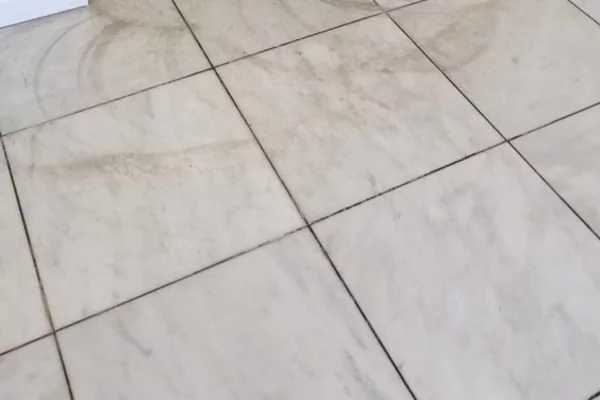
- After using the shower or cleaning, wipe down the tiles and grout with a towel or squeegee to remove excess moisture.
- Ensure proper ventilation by using an exhaust fan or opening a window to reduce humidity levels.
- Apply a grout sealer every 6–12 months to create a protective barrier against moisture and mold.
- Repair any leaks or dripping faucets promptly to avoid wet surfaces and mold growth.
- Regularly clean tile and grout lines to keep grout stain-free.
How can Professional Tile & Grout Cleaning Help?
Simple household solutions and proper maintenance tips can effectively remove mold stains from grout and keep it mold-free. Regular cleaning, ventilation, and sealing will help prevent mold from returning, ensuring your grout stays clean and fresh for the long term.
Professional tile & grout cleaning services offer deep cleaning solutions that go beyond regular household methods. Our experts use specialized equipment and powerful cleaners to remove embedded dirt, mold, and stains, restoring the original look of your grout and tiles.
We also apply advanced sealants to protect the grout from future mold and moisture, ensuring longer-lasting cleanliness and reducing the need for frequent maintenance.
Call us today for your tile and grout cleaning needs!
FAQs
Q.1 Does vinegar kill mold on grout?
Yes, vinegar is effective at killing mold on grout. Its acidic nature helps break down mold and mildew, making it easier to scrub away. However, for deep-set mold, stronger solutions or professional cleaning may be needed.
Q.2 How to clean grout that has turned black?
To clean blackened grout, use a paste of baking soda and water or 3% hydrogen peroxide, applying it to the grout and scrubbing with a brush. For severe stains, stronger cleaners like bleach or opt for professional cleaning.
Q.3 Will mold come back after cleaning with vinegar?
Mold can return if moisture levels remain high, even after cleaning with vinegar. To prevent mold from coming back, ensure the area is well-ventilated, keep it dry, and regularly clean and seal the grout.
Q.4 Which kills mold better, bleach or vinegar?
Bleach is stronger at killing mold on non-porous surfaces, but vinegar is more effective for porous areas like grout. Vinegar penetrates deeper, while bleach may not fully reach mold within the grout’s porous structure. Both can work in a way, depending on the situation.