

A wood floor that has gone dull is usually not worn out. In most of the homes we visit, the finish is intact and buried under a film of cleaning product residue that no amount of mopping removes.
That distinction matters most in November, when homeowners across Los Angeles and the San Fernando Valley start looking hard at floors they have walked past all year. Professional cleaning restores a great deal of what people assume requires refinishing.
Peter and Jackie Shams run every job personally. On wood that matters, because the call on whether a floor needs cleaning or refinishing changes the cost by an order of magnitude, and the person making that call should be the person doing the work. Every wood floor cleaning service covers that assessment before anything gets scheduled.
Why Wood Floors Lose Their Shine
Residue is the usual culprit. Consumer floor products, particularly the ones promising shine, leave a thin polymer layer behind with every application. Each coat adds to the last, and the accumulation scatters light instead of reflecting it.
The appearance is distinctive once you know it. The floor looks cloudy rather than scratched, with a slightly sticky feel underfoot and a pattern of streaking that follows the direction the mop travelled. Areas that get mopped most often, usually kitchens and hallways, look worst.
Oil soaps cause the same problem more quickly. They build a film that holds soil and darkens over time, and the floor that was described as nourished ends up looking grey.
What a Professional Cleaning Actually Removes
The process starts with identifying the finish. Polyurethane, aluminium oxide, wax and penetrating oil all respond differently, and a product that works on one damages another. Peter determines what is on your floor before anything is applied.
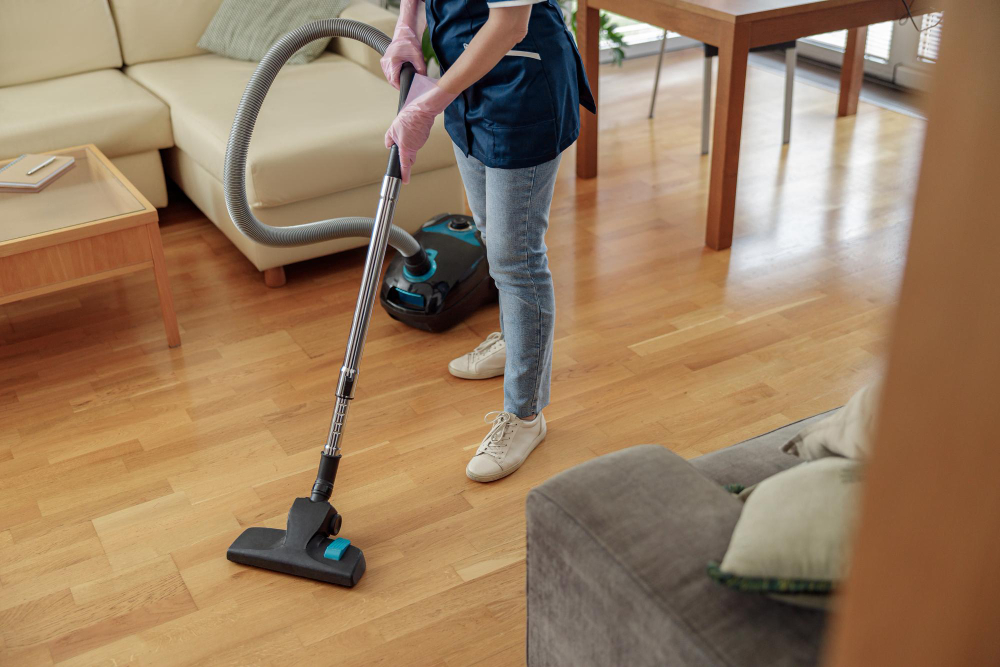
Dry soil removal comes first, because grinding grit across a wood surface during wet cleaning creates fine scratches that were not there before. Vacuuming with the right attachment removes what a broom pushes around.
A cleaning solution matched to the finish then breaks down the accumulated residue, with dwell time to let it work. Extraction or controlled wiping lifts the dissolved film away rather than redistributing it, which is the step a mop fundamentally cannot perform. What emerges is the original finish, which in most homes still has plenty of life in it. These notes on sticky residue on wood floors cover what oil based products leave behind and why the film rebuilds so quickly.
Floors looking dull and not sure whether they need cleaning or refinishing? Call us (818) 263-9314, and we will tell you before you spend anything.
Timing the Work Before Guests Arrive
Book a week to ten days ahead. Wood floor cleaning does not have carpet’s long dry time, but a buffer leaves room to address anything the assessment turns up and keeps you from scheduling work the day before you need the room.
Clear the floor of furniture and rugs ahead of the visit. Area rugs in particular should come up well in advance, because the area beneath them often looks different from the surrounding floor and seeing that difference early lets you decide how to handle it.
The floor is walkable shortly after cleaning. Rugs and furniture should wait until the surface is completely dry, since trapping any remaining moisture under a rug pad causes problems that take considerably longer to resolve than the cleaning took.
Keeping the Result Through the Season
Entry mats carry most of the load during a holiday period. Grit tracked in from outside is what scratches wood finish, and stopping it at the door does more good than any product applied afterward.
A few habits worth holding through the season:
- Sweep or vacuum high traffic areas several times a week
- Wipe spills immediately rather than letting them sit on the finish
- Use felt pads under all furniture legs and check them periodically
- Keep pet nails trimmed, since they scratch finish on contact
- Skip steam mops entirely on wood, including engineered wood
- Avoid oil soaps and shine products, which rebuild the film you just removed
Steam mops deserve emphasis. The combination of heat and moisture forces water into seams and can cause delamination on engineered wood, which is damage rather than wear and cannot be cleaned away.
Indoor humidity matters more than most homeowners realise. Wood expands and contracts with moisture in the air, and large swings cause gapping and cupping. The NWFA recommends keeping indoor relative humidity between thirty and fifty percent to limit that movement.
When Cleaning Is Not the Answer
Some floors need refinishing and we will say so. Scratches deep enough to catch a fingernail have gone through the finish into the wood, and cleaning reaches the surface rather than the damage beneath it.
Grey or dark areas at plank edges indicate moisture that has penetrated the seams, which is a structural issue rather than a cosmetic one. Finish that is peeling or flaking has failed and needs removing rather than cleaning.
Between those extremes sits a screen and recoat, where the existing finish is lightly abraded and a fresh coat applied. It restores gloss and adds protection without the days of downtime a full sanding requires. Our comparison of wood floor cleaning against refinishing covers where each option fits.
Peter walks the floor and gives a straight answer on which category yours falls into. Telling a homeowner their floor only needs cleaning is a conversation we have more often than the alternative.
Want the floors looking right before guests arrive? Get us a call at (818) 263-9314 or book online. Peter and Jackie handle every job personally, Monday through Sunday, 7am to 9pm.
Related Topics
- Upholstery Cleaning for Sectionals and Family Room Furniture
- Tile and Grout Cleaning for Entryways and Mudrooms


