

A sectional takes more punishment than any other piece of furniture in a house. It is where people eat, nap, work and pile on with the dog, and its construction hides the evidence better than a standard sofa does.
We clean upholstery across Los Angeles and the San Fernando Valley, and sectionals come up constantly because owners notice the problem late. The fabric looks acceptable from across the room right up until somebody pulls the cushions out.
Peter and Jackie Shams handle the work personally, which matters on a piece with this many fabric types, seams and hidden surfaces. The upholstery cleaning service covers sectionals, recliners, dining chairs and the rest of what a family room holds.
Why Sectionals Hide Soil Better Than Sofas
A sectional has joins. Every place where two units meet creates a gap that collects crumbs, dust, pet hair and the fine grit that works its way in from the floor. Those gaps sit below the visible seat line, so nothing about them registers until you separate the pieces.
Chaise sections compound it. The long horizontal surface collects body oils across its full length rather than concentrating them in seat positions, which means the soiling spreads evenly and never produces the obvious dark patch that prompts someone to call.
Reversible cushions create the last blind spot. Flipping a cushion makes the clean side visible and leaves the soiled side pressed against the frame, where it continues holding whatever was on it. Owners often believe the piece is in better condition than it is, simply because the worst surfaces are facing down.
What Family Room Use Puts Into the Fabric
Body oils are the main contributor and the least visible. Skin oils transfer continuously wherever people sit and lean, and they attract soil, which is why headrest areas and armrests darken before anything else on the piece.
Food is the second contributor, and family rooms get far more of it than dining rooms do. Crumbs work down into seams, liquid spills soak into foam below the fabric layer, and both feed odor that survives surface cleaning because the source sits deeper than any wipe reaches.
Pets add dander, hair and oils, and in homes where pets sleep on the furniture, the load concentrates in a few specific spots. Hair woven into fabric weave needs mechanical removal before any cleaning solution can reach the fiber underneath, which is a step in its own right rather than part of the vacuuming.
Not sure what condition your sectional is actually in? Call us (818) 263-9314, and pull a cushion and look at the underside. That tells the real story.
The Care Code Decides Everything
Every upholstered piece carries a manufacturer care code, usually on a tag under a cushion or beneath the frame. That code determines what can safely be applied, and ignoring it is how fabric gets ruined.
| Code | Meaning | What it allows |
|---|---|---|
| W | Water based cleaning | Water based solutions and extraction |
| S | Solvent based cleaning | Dry solvent only, no water |
| SW | Either method | Water or solvent, chosen by soil type |
| X | Vacuum only | No liquid of any kind |
Peter checks the code on every piece before anything is applied, and on a sectional that sometimes means several codes across one set of furniture if sections were bought at different times or cushions were replaced.
Fiber content matters alongside the code. Microfiber, chenille, linen blends and velvet each respond differently to moisture and agitation, and a solution that works on one leaves watermarks or crushed nap on another. Testing an inconspicuous area is standard practice before the first visible surface gets touched.
How We Clean a Sectional
The piece comes apart first. Sections get separated, cushions come off, and the frame surfaces and joins that normally sit hidden get vacuumed thoroughly. This is where most of the accumulated debris actually lives.
Pre treatment goes down next, matched to the care code and the soil present, with extra attention on headrests, armrests and seat fronts where body oils concentrate. The solution needs dwell time to break the bond between the oils and the fiber, and cutting that short is why rushed jobs leave the darkened areas looking much the same afterward.
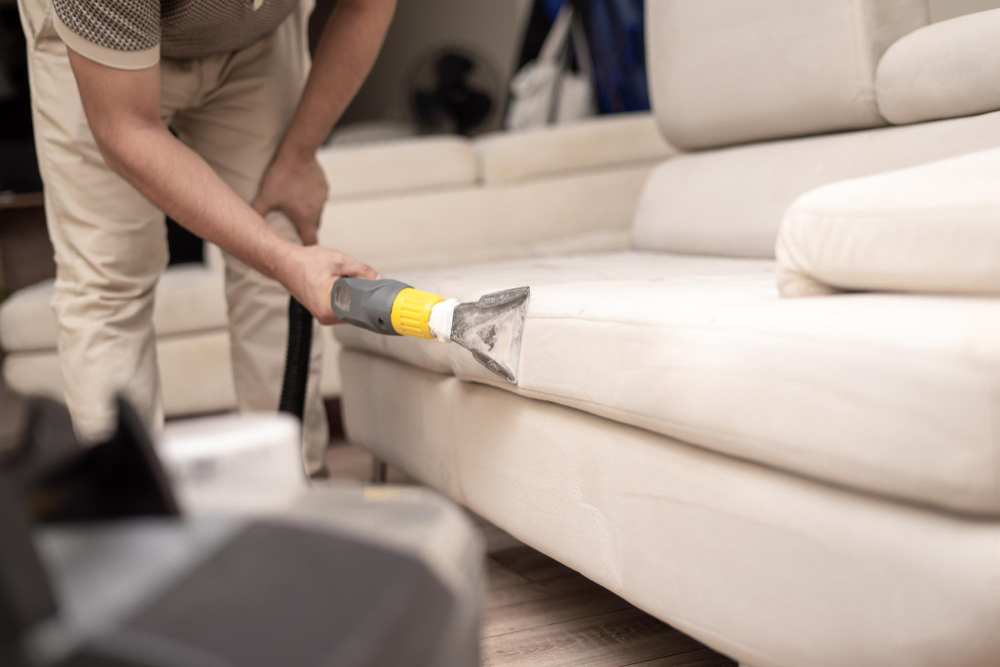
Extraction follows, using a hand tool rather than a floor wand so pressure and moisture stay controlled. Too much water in upholstery foam creates a drying problem and a potential odor problem, so the goal is thorough soil removal with the minimum moisture the job allows. Green Seal certified products go down on every piece, which is our standard across all service lines rather than an upgrade.
Most upholstery dries in two to four hours. Air movement shortens that, and we tell you which pieces will take longest based on fabric type and how heavily soiled they were.
What Cleaning Will Not Fix
Fabric that has been worn thin at a contact point is damaged rather than soiled. Cleaning removes what is on it and does not restore the nap that has been rubbed away, and a chaise edge or an armrest that has gone shiny from years of use stays that way.
Sun faded fabric is the same situation. Dye that has been bleached by direct light cannot be returned, and the line between a faded panel and a protected one is permanent. Rotating cushions regularly slows this down considerably and does not reverse it once it has happened.
Odor that has reached the foam below the fabric is the third case. Surface extraction reaches the fabric layer and the top of the foam, and a deep saturation from a pet accident or a large liquid spill can sit below that. Peter assesses this before quoting and says plainly whether cleaning resolves it or whether the cushion insert needs replacing.
Family room furniture seen better days? Get us a call at (818) 263-9314 or book online. Peter and Jackie handle every job personally, Monday through Sunday, 7am to 9pm.
Related Topics
- Tile and Grout Cleaning for Entryways and Mudrooms
- Can Professional Carpet Cleaning Remove All Stains?


