Almost every carpet cleaning website in Los Angeles uses the word “certified” somewhere. Very few explain what the certificate is, who issued it, or what the person holding it had to do to get it.
We are Peter and Jackie, and we have run JP Carpet Cleaning Expert Floor Care since 2007. We hold IICRC certification across four tracks. It’s one of the few things in this trade a customer can independently verify, and that is exactly why we lead with it.
For homeowners looking for premier carpet cleaning in Los Angeles, that kind of transparency matters. You should not have to guess whether the person walking into your home actually knows what they are doing.
What the IICRC Actually Is
The Institute of Inspection, Cleaning and Restoration Certification is an independent credentialing body for cleaning and restoration professionals. It sets written standards for how the work should be performed and tests technicians against them.
Those standards carry names that show up in insurance claims and legal disputes. The S100 standard covers professional carpet cleaning, S300 covers upholstery, S500 covers water damage restoration, and S700 covers hard floor cleaning. They exist to provide an agreed definition of correct practice rather than whatever a given company decides to call it.
The organization does not sell certification. A technician sits a proctored exam, passes it, and then maintains the credential through continuing education. A company cannot buy the credential for its staff, and a logo on a website isn’t the same as a person who passed the test.
Understanding this distinction is the starting point for knowing what to expect from a professional carpet cleaning service before anyone shows up at your door.
What a Certified Technician Is Tested On
Fiber identification comes first, because everything downstream depends on it. Wool, nylon, polyester, olefin, and blends respond differently to heat, pH, and agitation, and what’s safe for one can damage another. That is why choosing the right carpet cleaning method always starts with correctly reading the fiber first.
Cleaning chemistry follows from that. Alkaline pre-sprays lift oily soil effectively and will strip color from wool if the pH is not managed. Acidic rinses neutralize residue and protect dye stability. Getting this wrong does not produce a slightly worse clean, it produces a carpet with a permanently altered appearance.
The exam also covers soil removal methodology, dwell time, extraction technique, and drying. A technician who understands why pre-spray needs to sit before extraction and how long will produce a materially different result from one who wets and vacuums the floor.
The Four Tracks We Hold
Most local operators who hold any IICRC credential hold one. We hold four, and they overlap in ways that matter when a house has more than one problem at the same time.
| Track | What it covers | When it matters |
|---|---|---|
| Carpet Cleaning | Fiber identification, chemistry, pH, soil removal | Every carpet job |
| Rug Cleaning | Construction type, dye stability, fiber-specific method | Wool, silk, hand-knotted rugs |
| Upholstery Cleaning | Fabric identification, care codes, safe methods | Sofas, sectionals, fabric furniture |
| Water Damage Restoration | Extraction, structural drying, moisture documentation | Leaks, floods, wet carpet |
The practical value shows up on a job where a leak has soaked carpet next to an area rug and a sofa skirt. One certified pair of hands can assess all three correctly, rather than three companies each treating their own piece and nobody responsible for the whole picture.
Booking a floor service and want to make sure you’re working with a certified professional? Call (818) 263-9314 for a certified carpet assessment anywhere in the San Fernando Valley.
What Certification Changes on an Actual Job
The most visible difference is what happens before any equipment comes out. A certified technician identifies the fiber, checks dye stability in an inconspicuous spot, and selects chemistry accordingly rather than using one product across every house on the schedule.
It also changes what gets said out loud. Certification training covers what cleaning cannot fix, which means bleach spots, dye reactions that have altered the fiber, and pile that has been crushed flat for years in a traffic lane. Those get identified before the invoice rather than explained afterward.
Drying is the third area. Overwetting causes wicking, where soil in the backing travels up to the surface as the carpet dries and leaves a floor that looks worse than before it was cleaned. Extraction technique and dry time expectations are part of what gets tested, which is why we quote 4 to 6 hours and mean it.
What to ask any carpet cleaner in Los Angeles before booking:
- Which IICRC tracks do you personally hold, and in what year did you certify
- Do you use truck-mounted or portable equipment
- What products do you use, and are they third-party certified
- Who will actually be doing the work at my house
- What will you tell me if a stain turns out to be permanent
How We Work and How to Verify It
Peter holds the certifications and does the work. There is no rotating crew and no subcontracting, which means the person who assessed your floor is the person operating the wand.
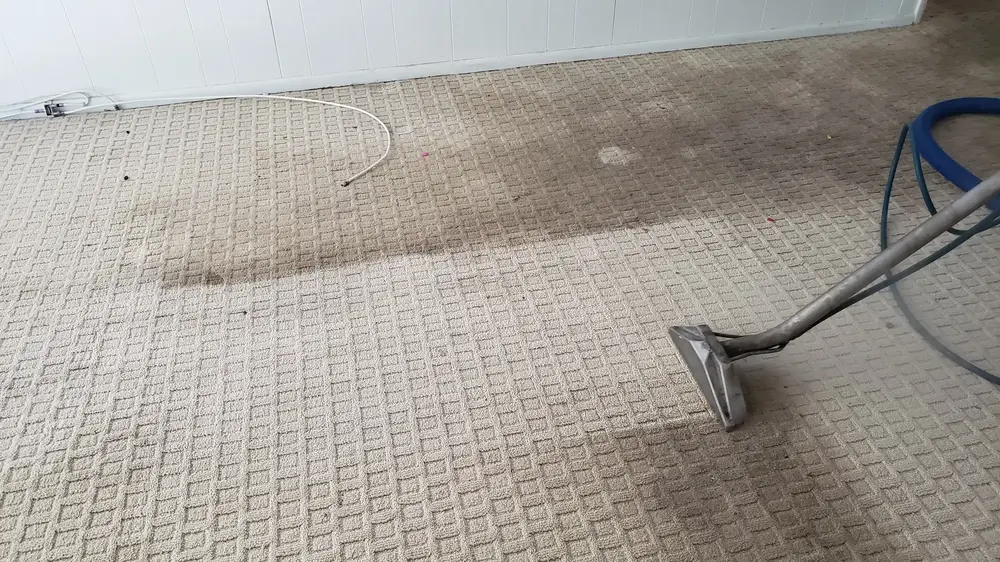
Our carpet and rug cleaning runs on truck-mounted hot water extraction, with the machine staying in the van and only the wand and hoses coming inside. That produces higher water temperature and stronger suction than portable units, which is what makes the 4- to 6-hour dry time realistic rather than optimistic. Green Seal certified products are used on every service line as the standard, not as an upgrade tier.
Anyone can check an IICRC credential independently through the organization itself. We would rather customers verify than take our word for it, because a trade where the word “certified” is used this loosely benefits from people asking.
Frequently Asked Questions
Is IICRC certification required to clean carpet in California?
o. Carpet cleaning does not require the credential, which is precisely why it functions as a differentiator. Anyone can buy a machine and begin working, so the certification is a voluntary signal that a technician has been tested against a written standard.
Is IICRC certification the same as being insured?
No, they are separate things. Certification addresses technical competency through examination. Insurance addresses financial responsibility if something goes wrong. A homeowner reasonably wants both, and should ask about them as two distinct questions.
Does certification expire?
The credential is maintained through continuing education rather than held permanently after one exam. That requirement exists because fiber technology, construction methods, and cleaning chemistry change over time. A technician who certified once in 2005 and never continued is not in the same position as one who has kept current.
Do national franchises hold IICRC certification?
Certification is held by individual technicians rather than by brands, so it varies by location and by person. The question worth asking is whether the specific technician arriving at your home holds it, not whether the company name appears somewhere on a list.
Does certification guarantee a stain comes out?
No, and any cleaner promising that is overselling. Certification means the technician can correctly identify what is removable and what has permanently altered the fiber. Knowing the difference before starting is the actual benefit.
Reach out at (818) 263-9314 or email info@jpfloorcare.com if you want a certified assessment of your floors anywhere across the San Fernando Valley, and we will tell you what your carpet needs before we quote it.
Related Topics: