
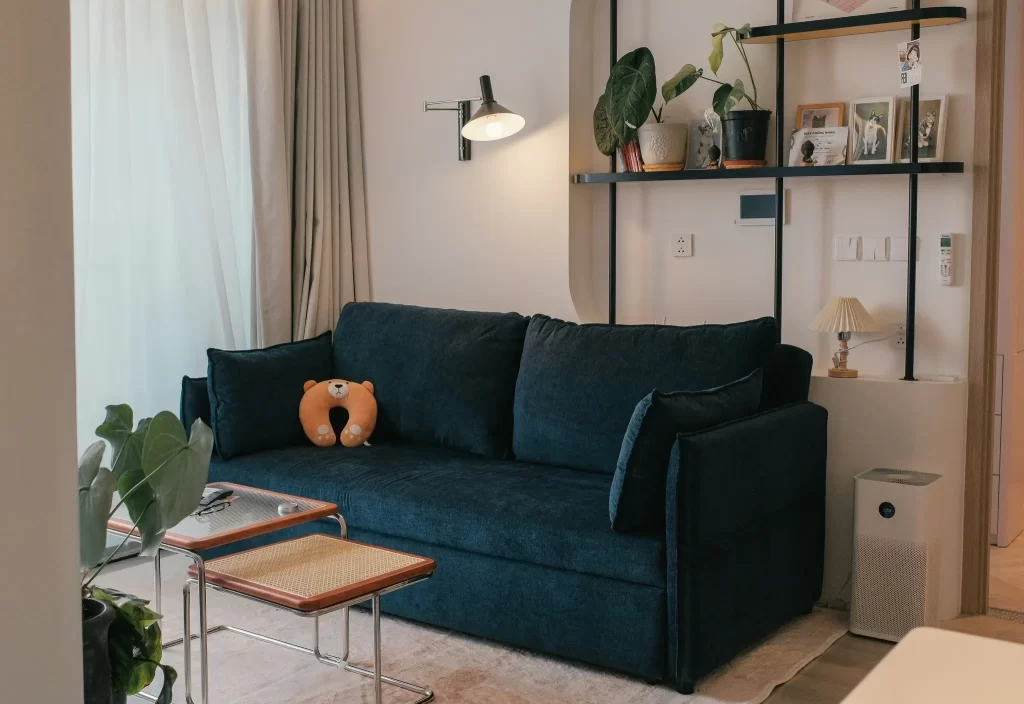
A sofa that a dog sleeps on absorbs far more than most owners realize. Hair is the visible part, and it is the least of it. Body oils, dander, saliva, and tracked-in soil work down through the weave into foam that never gets touched by a vacuum.
We are Peter and Jackie, and we have cleaned upholstery in pet households across Los Angeles since 2007. If you are also dealing with rugs and floors, our eco-friendly carpet cleaning in Los Angeles covers that side of things too. The pieces we see most often are the ones where the owner has already tried a consumer spray and found the smell came back within a week or two.
What Pets Actually Leave in Upholstery
Dander is skin cells, and it is microscopic. It settles into the weave, works into the foam beneath, and is the primary trigger for people with pet allergies, which is why a household member can react in a room where the animal is not present.
Body oils are the second deposit, and they are the reason a cushion darkens over time in the shape of where an animal lies. Those oils bind soil to the fiber, which produces a gradual dulling that reads as wear when it is actually accumulated contamination.
Saliva and paw traffic complete the picture. Saliva carries proteins that break down and produce odor. Paws bring in whatever was on the ground outside, which in this area means fine dust and dry soil that grinds into the fabric with every movement, the kind of buildup that regular upholstery cleaning is designed to lift back out.
Reading the Fabric Care Code Before Anything Else
Every piece of upholstered furniture carries a cleaning code, usually on a tag under a cushion or beneath the frame. It dictates what may safely touch the fabric, and ignoring it is how sofas get ruined.
| Code | Meaning | Practical effect |
|---|---|---|
| W | Water-based cleaning | Most flexible, suits standard extraction |
| S | Solvent-based only | Water will stain or shrink the fabric |
| WS | Either method acceptable | Method chosen by soil type |
| X | Vacuum only | No liquid cleaning of any kind |
Peter checks the code before selecting anything. An S-coded fabric treated with a water-based product does not simply clean poorly, it can develop watermarks and shrinkage that are permanent.
X-coded pieces get an honest answer before anything else happens. Those fabrics cannot take a liquid method, and a company willing to wet one anyway is gambling with furniture that belongs to somebody else. Our guide to cleaning sofas and sectionals walks through what each care code allows and which method matches it.
Cushion Cores and Why Odor Returns
The most common complaint we hear is that a sofa smelled fine for a week and then smelled like a dog again. That timeline points to the foam rather than the fabric.
Cushion cores are absorbent, and they hold what passes through the cover. Surface cleaning removes what is on the fabric and leaves the reservoir underneath untouched, so the odor is masked temporarily and returns as normal use pushes air back through the foam.
Depth matters the same way it does in carpet. Contamination confined to the cover responds well to extraction. Contamination that has soaked through into the core, particularly from an accident rather than gradual accumulation, may need separate treatment or, in some cases, replacement.
This is why our approach to fabric and microfiber sofas changes with the material, depending on how each one holds and releases moisture during extraction.
Not sure whether your sofa odor is in the fabric or the foam? Let us assess it before you spend on a cleaning that may only address half the problem.
How We Clean Upholstery in Pet Households
Assessment comes first, and it covers fabric code, fiber type, dye stability, and where contamination actually sits. Dye stability gets checked in a hidden area, because color transfer on a visible panel is not something anyone can undo.
The cleaning method follows from that assessment rather than from a standard process applied to everything. Water-safe fabrics get hot water extraction with chemistry matched to the fiber and the soil type. Solvent-only fabrics get a solvent-appropriate method. Most upholstered pieces dry in 2 to 4 hours, which is shorter than carpet because there is less material holding moisture.
We hold IICRC certification in upholstery cleaning, which covers fabric identification and safe method selection specifically. Green Seal certified products are used on every job as our standard and in a pet household that carries practical weight, since the animal will be back on that sofa the same day.
Worth doing before we arrive:
- Vacuum loose hair from the piece, including under the cushions
- Locate the care code tag if you can find it
- Clear anything stored inside storage ottomans or sofa beds
- Note any spot where an accident happened, even an old one
- Plan to keep pets off the piece for the drying window
What We Will Tell You Honestly
Some outcomes are not achievable, and we say so during the walkthrough rather than after the invoice. Fabric that has been faded by sun exposure will not regain its color from cleaning, because the dye itself has changed.
Deep saturation into a cushion core from repeated accidents in the same spot sometimes cannot be fully resolved by extraction. Where that is the case, we explain what cleaning will and will not achieve so an owner can decide whether to proceed, replace the cushion, or replace the piece.
Odor from an animal that is still actively using a sofa as a toilet will return regardless of what we do. That is a behavioral issue first and a cleaning issue second, and treating it in the wrong order wastes money.
Frequently Asked Questions
Can upholstery cleaning remove pet odor permanently?
It depends on where the odor is coming from. Contamination in the surface fabric and upper foam responds well to extraction with appropriate treatment. Saturation deep in a cushion core may need the cushion addressed separately, and we assess that before quoting rather than after.
Is the cleaning safe for my pets?
We use Green Seal-certified products across every service line, which requires meeting third-party environmental and safety standards, including restrictions on volatile compounds. We still recommend keeping animals off the piece until it has fully dried, which is typically 2 to 4 hours.
How often should upholstery be cleaned in a pet household?
Roughly every 12 months for pieces an animal uses regularly, compared with 12 to 24 months for typical fabric furniture. Pieces the animal sleeps on daily sit at the shorter end of that.
Will cleaning remove pet hair?
Cleaning removes a great deal of embedded hair that vacuuming leaves behind, particularly hair worked down into the weave. Hair on the surface is better handled by vacuuming beforehand, which is why we ask owners to do that first.
Can you clean a microfiber sofa a dog sleeps on?
Yes, microfiber is among the most common fabrics we handle. The method still depends on the care code, since microfiber appears with W, S, and WS codes depending on the manufacturer. Peter checks the tag before choosing an approach.
Call us at (818) 263-9314 or email info@jpfloorcare.com about a sofa or sectional in your home, and we will tell you what cleaning can realistically achieve before you commit to anything.
Related Topics:


