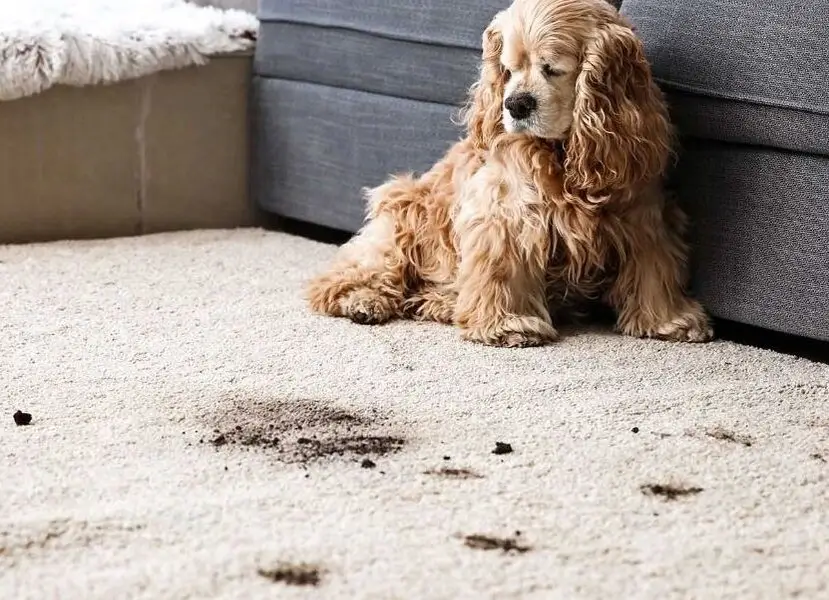
Homeowners dealing with recurring pet odor usually treat the spot they can see. The odor returns, they treat it again, and the cycle repeats because the area holding the urine was never the area they were treating. It’s a frustrating loop that doesn’t have to keep going.
We are Peter and Jackie, and we have been assessing pet contamination in Los Angeles homes since 2007. If you are looking for thorough, honest local carpet cleaning in Los Angeles, that is just what we do. A black light in a dark room is the fastest way to find out how much of a problem you actually have.
Why Urine Fluoresces Under Ultraviolet Light
Dried urine leaves behind salts and organic residue that react to ultraviolet light. Under a UV source in a darkened room, those deposits glow a dull yellow-green against carpet that stays dark.
The effect depends on the urine being dry. A fresh accident that has not yet dried and crystallized will not fluoresce reliably, which makes UV a tool for finding old contamination rather than recent spills.
Not everything that glows is urine. Optical brighteners in laundry products, some cleaning residues, and certain adhesives fluoresce as well, so read the glow alongside odor and location instead of taking it at face value.
Treating a glowing patch as confirmed contamination without checking those signs sends you after the wrong spot. That’s one of the common cleaning mistakes that leaves the actual source untreated.
What a Black Light Finds That the Eye Misses
Urine spreads outward as it soaks in. What appears on the surface as a small discolored patch typically sits at the center of a contamination zone several times its size, because liquid moved sideways through the pile and backed up before it stopped.
Under UV, the true footprint becomes visible and is often startling. A homeowner who believed they had three spots regularly finds a dozen and finds that the areas along a wall or behind a chair are worse than the one in the middle of the room they had been treating.
Treating only the visible stain while leaving the surrounding zone untouched is the single most common reason odor returns after a homeowner treatment. Partial removal produces partial results, humidity brings the rest back, and each round of retreatment adds to the overall carpet cleaning time needed to actually solve the problem.
How to run a UV check in your own home:
- Wait until it is fully dark and turn off every light in the room
- Use a UV flashlight held about 12 to 18 inches above the carpet
- Move slowly in overlapping passes rather than sweeping quickly
- Mark what you find with painter’s tape or sticky notes
- Check along baseboards, behind furniture, and at room edges where owners rarely look
The Limits of UV Detection
A black light shows a surface footprint. It says nothing about depth, and depth is the variable that determines whether cleaning will resolve the odor or merely postpone it.
The carpet sits over padding, and the padding sits over the subfloor. Urine moves downward under gravity, and a large or repeated accident can pass through the fiber into the backing, then the pad, and in bad cases into the subfloor beneath. Every one of those layers looks identical from above under UV.
False positives are the second limitation. Old cleaning residue and laundry brightener tracked in on socks will both fluoresce, and a homeowner working from UV alone can end up treating areas that were never contaminated while missing something that has stopped fluorescing because it was previously cleaned at the surface.
Pairing UV With Depth and Moisture Checks
UV mapping is where our assessment starts rather than where it ends. Once the zones are marked, the question becomes how far down each one goes.
Peter checks by lifting a carpet corner near the worst areas and examining the padding directly. Padding that has been saturated shows discoloration, stiffness, or holds the odor even when the carpet above it has dried completely. That physical check answers what no light can.
| Method | What it reveals | What it cannot tell you |
|---|---|---|
| UV light | Surface footprint of dried urine | How deep contamination goes |
| Odor assessment | Whether growth or crystals are active | Exact location of the source |
| Lifting a carpet corner | Padding condition and saturation | Full extent across the room |
Dealing with an odor that keeps coming back? Ask us at (818) 263-9314 to map it before you spend anything on another treatment. Knowing the depth changes what the right fix is.
How We Use the Map on the Job
The mapped zones determine the treatment area, and we treat the full zone rather than the visible spot. That alone resolves a large share of the cases where a previous cleaning failed to hold.
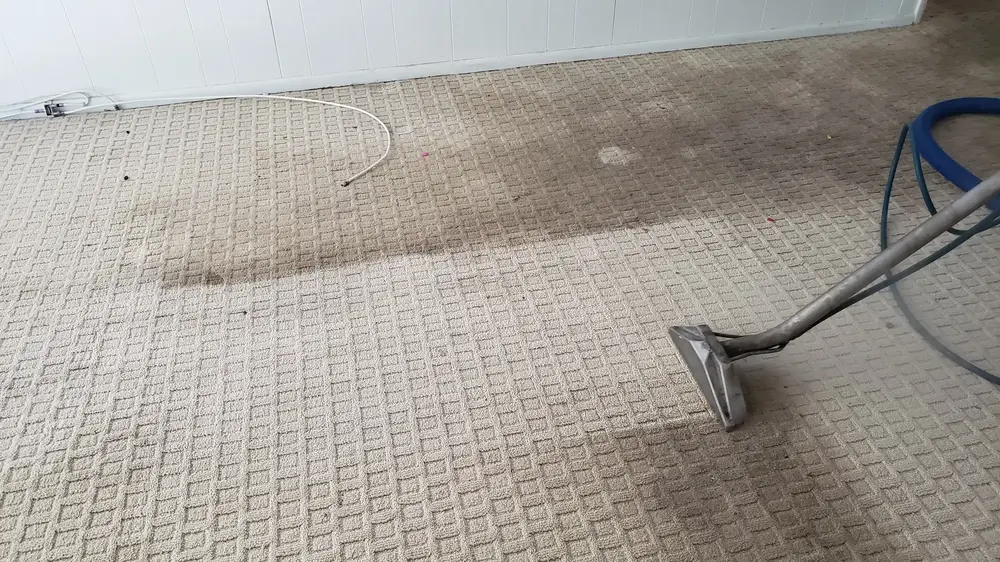
For contamination confined to the fiber, truck-mounted hot water extraction combined with an appropriate treatment removes the source. The machine stays in the van and only the wand and hoses come inside, which gives the temperature and suction that consumer equipment cannot match. Most carpets are dry in 4 to 6 hours afterward.
For contamination that reached the padding, we say so before quoting. No cleaning applied to the top of a carpet removes odor coming from below it, and we would rather lose that job than take money for a result we know will not last.
We hold IICRC certification in carpet cleaning and rug cleaning, and we use Green Seal certified products on every treatment, which matters in homes where animals will be back on that floor within hours.
Frequently Asked Questions
Do I need a special UV light, or will any black light work?
A basic UV flashlight sold for pet detection works well enough for a homeowner check. The room needs to be genuinely dark, which is the part people usually get wrong. Daylight or a hallway light spilling in will wash out the fluorescence.
Why did my carpet glow in places where there is no smell?
Optical brighteners from laundry products, old cleaning residue, and some adhesives fluoresce under UV. A glowing area with no odor and no history is often one of those rather than urine, which is why the finding gets interpreted alongside smell and location.
Can UV detect urine that has already been cleaned?
Sometimes. Surface treatment can reduce fluorescence while leaving deposits in the backing or pad, so a previously cleaned area may show faintly or not at all despite still holding contamination. Odor that returns with humidity is the more reliable signal in that situation.
Does UV work on area rugs and upholstery?
Yes, the same principle applies to both. Rugs need extra care because construction and dye stability vary, and we identify those before any treatment. Upholstery frequently shows contamination in cushion cores that the surface fabric hides completely.
If the pad is contaminated, is the carpet always ruined?
Not always. Pad replacement with treatment of the subfloor resolves many of these cases while keeping the existing carpet. We assess and tell you which option is realistic before any work is scheduled.
Get in touch at (818) 263-9314 or email info@jpfloorcare.com and we will map the contamination in your home properly before recommending anything.
Related Topics: