

A professional carpet cleaning visit runs on a predictable sequence, and knowing that sequence makes the appointment easier for everyone. Most homeowners have only a vague idea of what the three or four hours actually involve.
We have been running these appointments across Los Angeles and the San Fernando Valley since 2007. Peter and Jackie Shams handle the work themselves, so the person who quoted your job is the person at your door, and there is no handoff where details get lost. Our carpet cleaning service follows the same sequence on every residential job.
What follows is the actual order of operations on a residential job, including the parts most companies do not explain and the parts where your input changes the outcome.
The Arrival Walk Through
Nothing gets sprayed until Peter has walked the space with you. That walk takes ten to fifteen minutes and it determines everything that happens afterward.
He identifies fiber type first, because nylon, polyester, olefin and wool each respond differently to cleaning chemistry and pH. Getting that wrong is how carpet gets damaged, and it is the step that uncertified operators most often skip because they run the same solution on every floor regardless.
He then notes soiling patterns, specific stains, pet areas and anything that looks like prior treatment. This is also the point where you hear the honest assessment. If a stain is permanent, you hear it now. If pet contamination has reached the pad, you hear that now too, before any money changes hands.
Furniture, Access and Setup
Standard household furniture gets moved as part of the job. Sofas, chairs, coffee tables and dining chairs are routine. Large or fragile pieces, anything with belongings inside, and electronics should be cleared ahead of time, and we confirm during the walk through what is moving and what is staying.
Clearing these ahead of our arrival makes a real difference to how much carpet we can reach:
- Toys, shoes, pet bowls and laundry baskets
- Breakables and anything on low shelves near the floor
- Storage boxes kept under beds and sofas
- Charging cables and extension leads running across carpet
- Floor lamps and small side tables you would rather move yourself
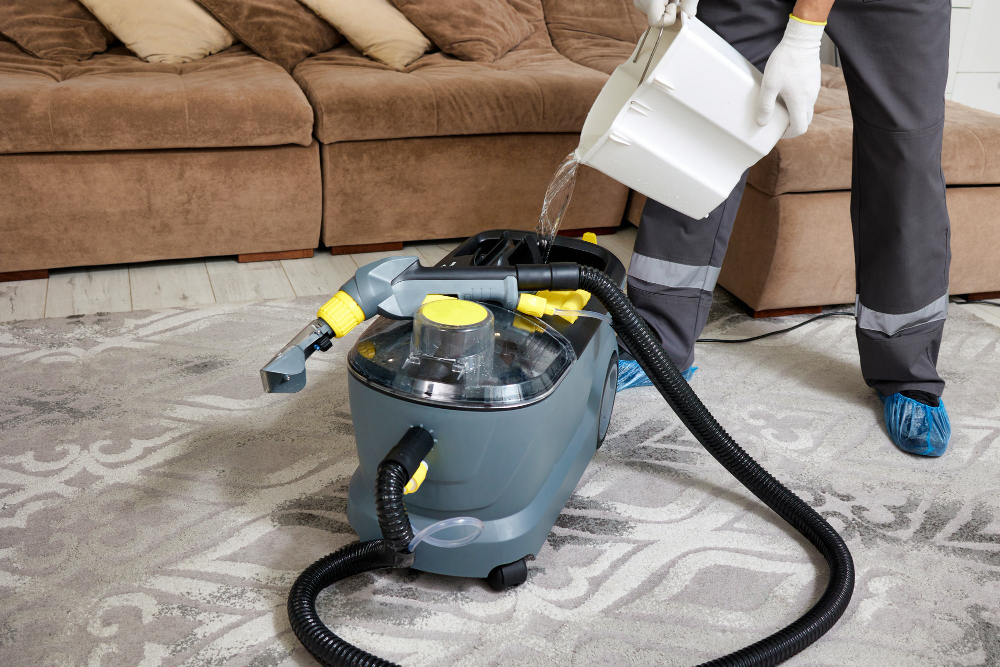
The truck mounted machine stays in the van. Only the wand and the hoses come into the house, which means no heavy equipment on your floors and no motor noise inside. We run hoses through the nearest practical entry point and set door guards so nothing gets damaged on the way in.
Parking near the house matters more than people expect. The hose run has a working length, and a van parked three houses down costs suction. If street parking near your door is difficult, mention it when booking so we can plan around it. Sofas and chairs in the same rooms can be cleaned during the same visit with an upholstery cleaning service, which saves a second appointment.
Booking soon and unsure how to prepare? Call us (818) 263-9314, and we will walk you through it on the call.
Pre Spray and Dwell Time
Pre spray goes down on traffic lanes and soiled areas first, matched to the fiber type and the soil present. This solution breaks the bond between the soil and the fiber so extraction can actually lift it out.
Then comes the part that separates a thorough job from a fast one. The solution needs to sit. Dwell time is usually several minutes, and during that window nothing visible is happening, which is exactly why rushed operators cut it short. Extracting too early means the bond has not released and the soil stays put.
Heavier soiling gets agitation with a grooming tool to work the solution down into the pile. Spot treatments for specific stains are applied separately at this stage, since a general pre spray and a targeted stain treatment are rarely the same chemistry. A detailed breakdown of pre treatment in carpet cleaning explains why this step carries so much of the result.
Extraction and Grooming
Hot water extraction injects heated water under pressure into the pile and immediately pulls it back out along with the dissolved soil. The term steam cleaning gets used for this, though no steam is involved. The truck mounted system produces higher temperature and stronger suction than any portable unit, and suction is what determines how much water leaves the building.
Heavily soiled areas get a second pass. Peter works in overlapping sections so there are no untreated strips, and dry strokes follow the wet strokes to pull out as much remaining moisture as the machine can take.
Grooming comes last. A rake or brush lifts the pile so the fibers stand upright and dry evenly, which prevents the matted appearance people sometimes see after a cleaning. Carpet that looks crushed immediately after extraction usually just has not been groomed, and it recovers as it dries.
Dry Time and the First Day After
Most carpets dry in four to six hours. Thick pile and natural fibers like wool take longer, and Peter gives you a specific estimate for your floor based on what he saw during the walk through rather than a generic number.
Air movement is the main variable you control. Ceiling fans, open windows when the outside air is dry, or air conditioning running all shorten the window noticeably. Humidity does the opposite, which is why dry times stretch during a damp stretch of weather.
Walk on the carpet as little as possible while it is damp, and when you do, use clean socks rather than shoes or bare feet. Shoes track new soil into fiber that is still open, and bare feet leave oils behind.Keeping traffic off the carpet after cleaning for those first hours protects the result you just paid for.
Furniture goes back once the carpet is dry. Putting wooden or metal legs back onto damp fiber can transfer stain or rust marks, so if pieces need to return early, we place protective tabs underneath them.
Ready to book? Get us a call at (818) 263-9314 or book online. Peter and Jackie run every appointment personally, Monday through Sunday, 7am to 9pm.


