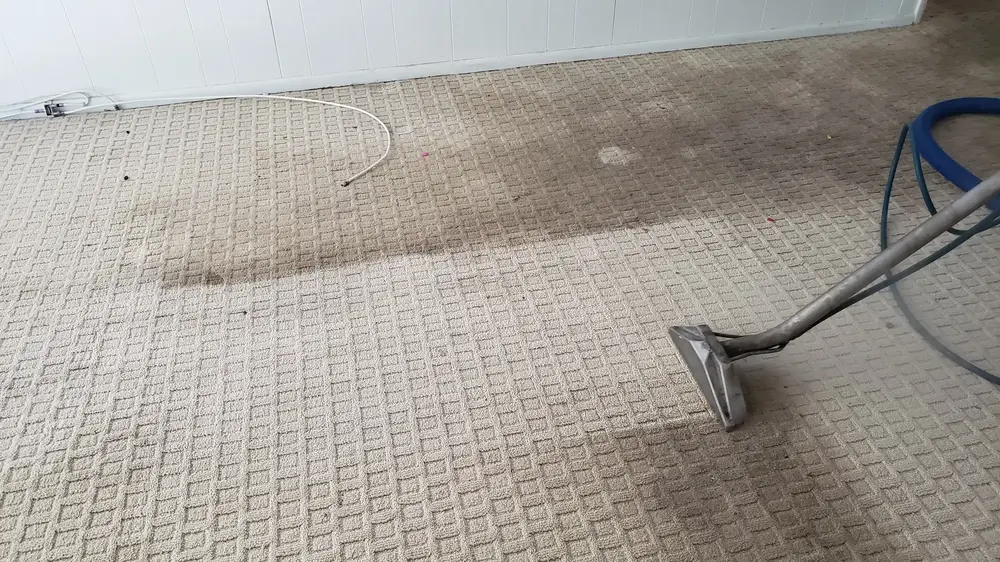
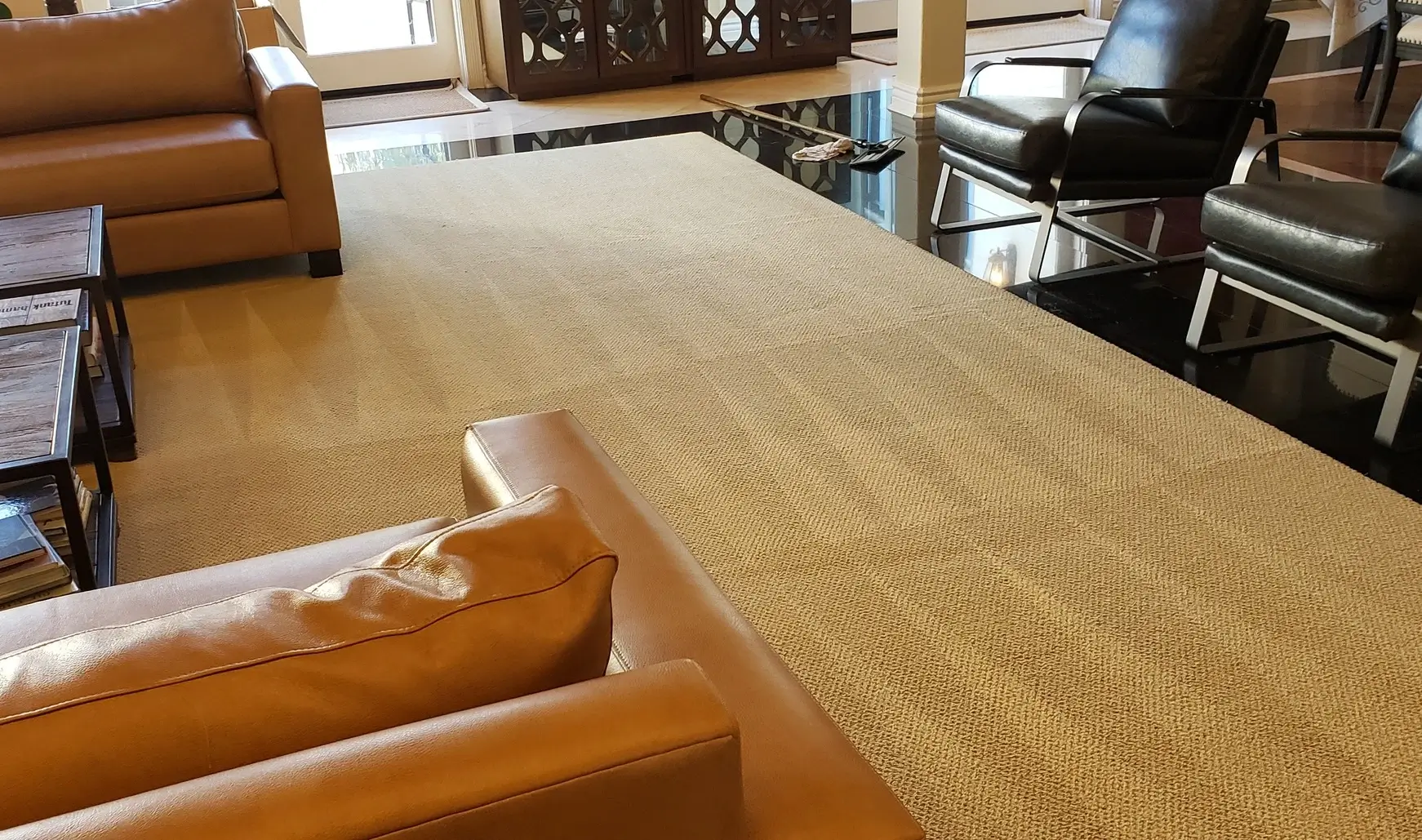
Carpet holds moisture longer than any other surface in a house. A slow supply line behind a wall, a planter that overflows, or a window left open during a storm can put enough water into the pile to start growth within a day or two. The smell almost always arrives before the stain does.
We are Peter and Jackie, and we have run JP Carpet Cleaning Expert Floor Care ourselves since 2007. If you are looking for professional carpet cleaning in Los Angeles that actually gets to the root of the problem, that matters more with mold than just about anything else.
Mold calls are among the ones we say no to most often, because cleaning that leaves contaminated padding underneath does nothing except reset the clock.
What Mold and Mildew Look Like in a Carpet
Mildew is surface growth. Mold is what mildew becomes when it has time and moisture to work with, and it moves downward into the backing and padding rather than spreading across the pile. The distinction matters because it decides whether cleaning is worth doing at all.
Homeowners usually notice the odor first. It reads as musty or earthy, gets stronger in a closed room, and returns on warm afternoons even after the carpet has been vacuumed and aired out.
This is one reason the debate over steam cleaning vs. dry cleaning carpet misses the point once mold is involved, since neither method reaches moisture trapped in the backing. An odor that comes and goes with humidity is one of the most reliable signals that growth is active below the surface.
Signs worth checking before you call anyone:
- A musty smell that intensifies when the room has been shut for a day
- Discoloration that shows through from the back of the carpet, not just on the pile
- Padding that feels stiff, damp, or crunchy when you lift a corner
- Carpet that stayed wet longer than about 48 hours after any water event
- Allergy symptoms that ease when someone leaves the room and return when they come back
Why Los Angeles Homes Get Carpet Mold Despite the Dry Climate
Regional humidity has almost nothing to do with it. Carpet mold in this area is nearly always driven by a contained water event inside the house, and the dry air outside gives homeowners false confidence that things will dry on their own.
Slab foundations are a common factor across the San Fernando Valley. Moisture moving up through a slab under carpet that sits directly on it will keep padding damp indefinitely, and no amount of surface drying changes that.
Older homes with original plumbing and homes where a water heater or washer sits near carpeted space account for a large share of what we see. Catching these leaks early is exactly what our water damage restoration services are built around, since a few days of standing moisture is all it takes for growth to start.
The other pattern is the delayed discovery. A leak runs behind a baseboard for weeks, the carpet edge stays damp the whole time, and by the time anyone smells it, the padding has been wet far longer than the window in which drying alone would have solved it.
What Has to Happen Before Any Cleaning Starts
The water source gets fixed first. Scheduling extraction before fixing the leak is one of the common carpet cleaning mistakes we see homeowners make, and it almost always means paying twice. We will not schedule a job that way.
Once the source is handled, the area needs full drying with air movement, not just time. Carpet that feels dry to the hand can still hold enough moisture in the backing and pad to support growth. Our IICRC water damage restoration training covers the S500 standard, which sets out how drying is documented rather than guessed at.
If the affected area is larger than a small spot, or if anyone in the home has a respiratory condition, an assessment comes before cleaning. Remediation and cleaning are different scopes of work, and pretending otherwise puts people at risk.
Not sure whether what you are smelling is mildew or something deeper? A walkthrough costs nothing and settles the question before you spend anything. Call us at (818) 263-9314.
When Carpet Can Be Saved and When It Cannot
The answer comes down to how far down the moisture and growth reached. Three outcomes cover almost every job we look at.
| Contamination level | What it looks like | Realistic outcome |
|---|---|---|
| Surface mildew | Musty odor, light discoloration on the pile, carpet dried within about 48 hours | Extraction and treatment usually resolve it |
| Backing involved | Odor returns after drying, staining visible from the underside | Depends on the assessment, cleaning sometimes holds |
| Pad saturated | Odor persists, padding stiff or discolored, subfloor damp | Pad replacement, and often the carpet with it |
We tell people which column they are in before quoting. A homeowner who pays for extraction on a saturated pad gets a carpet that smells clean for about a week and then smells exactly as it did before, and that outcome helps nobody.
How Our Team Handles Mold and Mildew Jobs
Peter walks the space first and checks the areas that do not photograph well, meaning under furniture, along baseboards, and at the carpet edge where the tack strip holds moisture. Padding gets checked by pulling a corner rather than being assumed from the surface.
When appropriate, cleaning runs through truck-mounted hot water extraction. The machine stays in the van, and only the wand and hoses come inside, which keeps the equipment weight and heat out of a room that already has an air quality problem. Green Seal certified products are used on every job we take, which matters more than usual in a room where people have been breathing spores.
Most carpets are dry in 4 to 6 hours afterward. We tell you what we found in the padding, whether or not it helps our invoice, because the alternative is a callback in three weeks and a customer who trusted us.
Frequently Asked Questions
Can professional cleaning remove mold from carpet?
Surface mildew on carpet that dried quickly usually responds to hot water extraction combined with an appropriate treatment. Growth that has moved into the padding or subfloor cannot be reached from the top of the carpet. We check contamination depth before quoting so you know which situation you have.
How long does wet carpet take to grow mold?
Growth can begin within 24 to 48 hours in wet material. That window is why fast extraction and drying after any water event matters far more than what the carpet is cleaned with afterward. After roughly two days, assume the padding needs to be checked.
Does the smell mean there is mold, or could it be something else?
A musty odor that strengthens with humidity and eases in dry conditions points toward active growth below the surface. Odors from pet contamination, spilled milk, or old cleaning residue behave differently. Peter can usually tell which is which during the walkthrough.
Should I use bleach on carpet mold?
No. Bleach damages carpet fiber and dye, does not reach contamination in the padding, and adds moisture to a material that already has too much. It also leaves residue that attracts soil afterward.
Do you replace padding or only clean?
We assess padding and tell you when replacement is the right call. Our work covers carpet cleaning and water damage restoration, and we will say plainly when the scope in front of us calls for something beyond what cleaning can deliver.
Contact Us
If you have a musty carpet anywhere across Los Angeles or the San Fernando Valley, call us, and we will look at it before you spend money on a cleaning that may not be the right fix.
Phone: (818) 263-9314 Email: info@jpfloorcare.comAddress: 10727 White Oak Ave #205C, Granada Hills, CA 91344 Hours: Monday-Sunday, 7 am – 9 pm; Phones Always Open
Related Topics: